Field Notes Brand vs. the office supply cabinet

A recent noon hour stroll took me near a university bookstore. As a bookstore, this place is only average for casual book browsing, as it is mainly a textbook store. But they also have a small stationery shop which was stocked with a few items I’d not previously seen in person.

One item that caught my eye was the Field Notes Brand steno book. To me, Field Notes is one of those “internet sensations” that is known to stationery aficionados, but which I don’t expect to see in “real life”. So, it was a nice surprise to see a small Field Notes display in a local store. I picked up a steno pad, and thought it might be fun to compare it with a “real life” item – a steno book that I’d find back at the office.

The office supply cabinet steno book was Staples brand.

A few notes: The Field Notes steno book is 80 pages, and the Staples steno book 350 pages. The Field Notes was $9.99, and the Staples book lists for $3.73. This makes the Field Notes approximately 12 cents/page, and the Staples 1/cent page. Twelve times more expensive per page is a significant difference. Is it worth it?
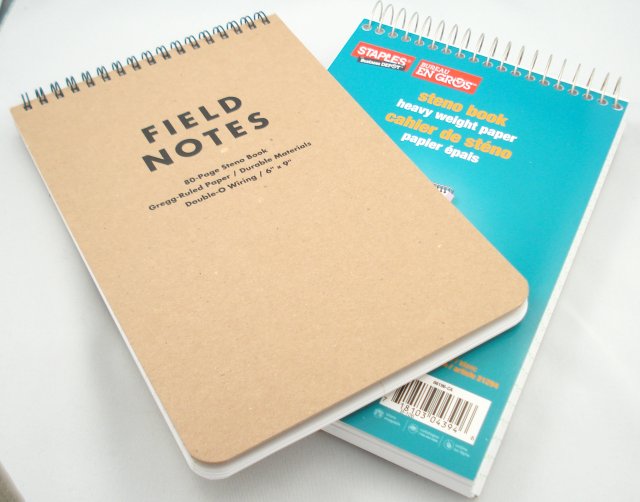
Field Notes Brand steno book

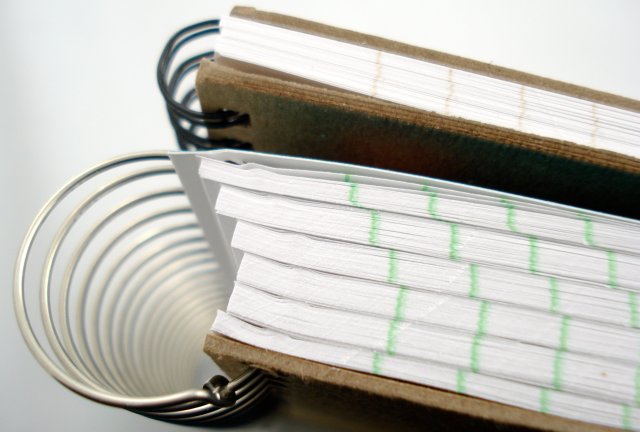
The two steno books in profile:

Field Notes Brand steno book

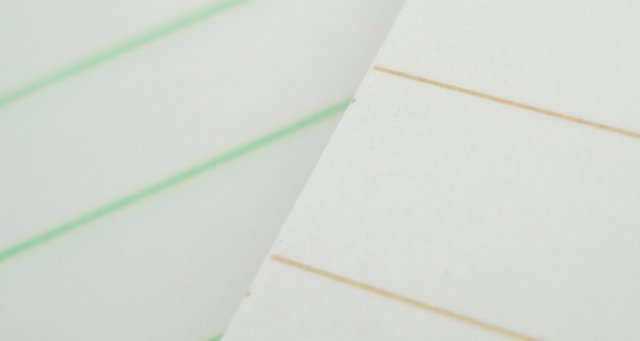
Both books are made in the US. The Field Notes has very strong cardboard covers front and back, and the Staples has a medium strength back. The Field Notes has brown lines which nicely match the covers. The Staples has green and red lines.
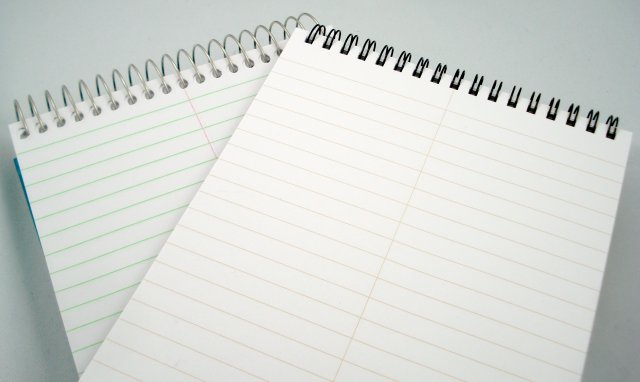
Field Notes Brand steno book

Green vs. brown:

Field Notes Brand steno book

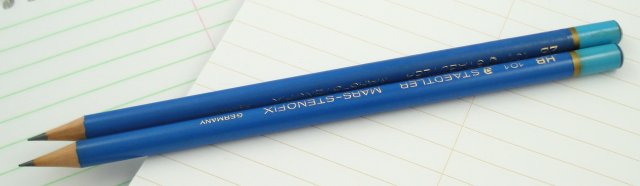
With some steno pencils:

Field Notes Brand steno book

The Field Notes paper is thicker, and one gets a sense of sturdiness. The results with graphite are similar:

Field Notes Brand steno book Field Notes Brand steno book

The Field Notes gets style points, but I wonder if it would really be the choice of anyone who just needs a steno book?

Tohkin pencil holder

Though Faber-Castell makes a remarkable pencil holder and extender, the market has a good deal of room for less expensive offerings. One of these is the pencil holder from Tohkin.

Tohkin pencil holder

From their website, it appears that Tohkin is a specialty pen clip manufacturer in Japan. This pencil holder seems to be a natural extension of their clip business.

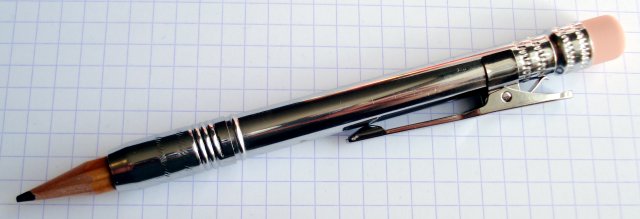
The chromed unit has two extra features that distinguish it from other inexpensive pencil extenders – an adjustable spring loaded clip, and a giant eraser. The clip can be moved up or down the extender barrel. I suspect the eraser could be replaced.

Even the default included pencil is good quality. I would say it is a useful and usable accessory for three dollars and change.

Red and Blue pencils from Berol México, Caran d’Ache, and Linex

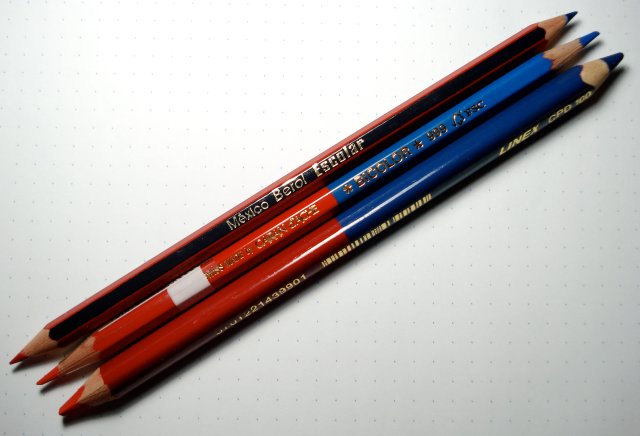
Today we examine a trio of red and blue pencils from around the globe.

red and blue pencils

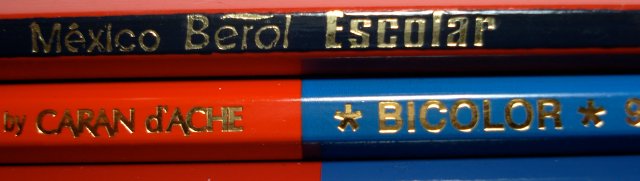
From Berol México we have the Escolar. A part of the global Sanford empire, Berol México continues to use historically important pen and pencil brand names such as Blaisdell and Esterbrook.

Sanford products from México can be found at some small independent art supply stores in Canada. The appearance of these products suggests that they have been in a dusty corner of a warehouse for some years. But I have no specific information.

This particular pencil is hexagonal and unsharpened, with the sides alternately painted red and blue. The stamping of the name may be on either a red or blue side.

red and blue pencils
L to R: CPD 100, Bicolor 999, Escolar

From Caran d’Ache is the Bicolor 999. Unlike many better known Caran d’Ache products, this pencil doesn’t appear to be widely exported from Switzerland.

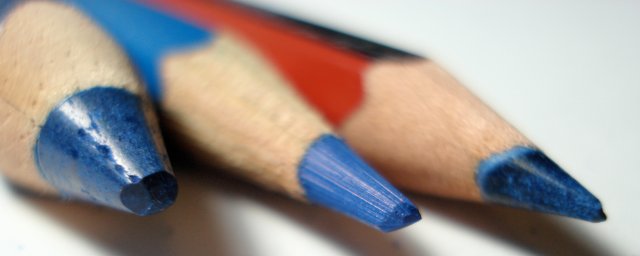
The pencil bears the FSC logo, and is hexagonal and pre-sharpened at both ends. The red end has a removable plastic cover embellished with a bar code.

red and blue pencils

Lastly, the Danish brand Linex (though the products don’t claim to be made in Denmark) offers the CPD 100.

The CPD 100 is an oversized triangular pencil, with the red end sharpened. A set of ten comes in a plastic wallet.

red and blue pencils

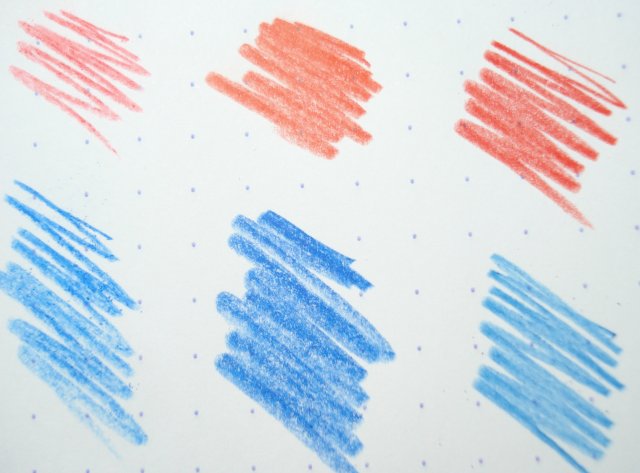
Trying them on paper, the Escolar does surprising well for a student pencil. It sharpens easily, the “red” is fairly red, the point doesn’t break under pressure.

The Bicolor 999 is a delight. Both ends leave truly smooth and rich lines. The “red” is slightly on the orange side. I want to keep using it. It is one of those pencils that demonstrates the merits of making and using quality pencils.

red and blue pencils

The CPD 100 is the disappointment of the three. The “red” is more on the pink side. The sharpening was tough, and the leads a bit on the scratchy side. It isn’t a terrible pencil, but there are better choices available.

Caran d’Ache Jass chalk pencil

Caran d'Ache Jass chalk pencil

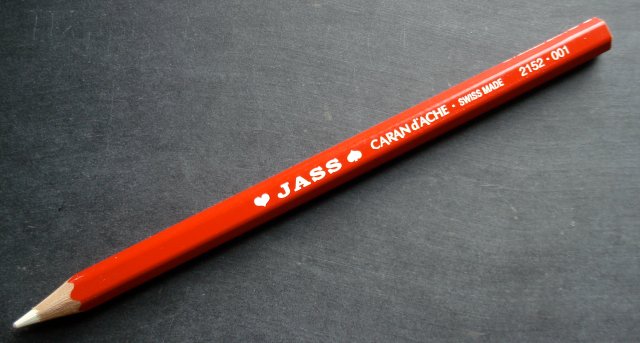
Here is an unusual pencil that I know little about. An oversized woodcased chalk pencil, the Jass allows for a lot more precision than a typical stick of chalk.

On slate:
Caran d'Ache Jass chalk pencil

Caran d'Ache Jass chalk pencil

On a chalkboard:
Caran d'Ache Jass chalk pencil

See Bleistift for a nice article on writing with chalk and slate (and variants).

Are there any teachers out there who might recall using chalk pencils?