Staedtler 925 25 20 2.0mm leadholder

Staedtler 925 25 20 2.0mm leadholder

Wow, this is just a beautiful leadholder.

Staedtler 925 25 20 2.0mm leadholder

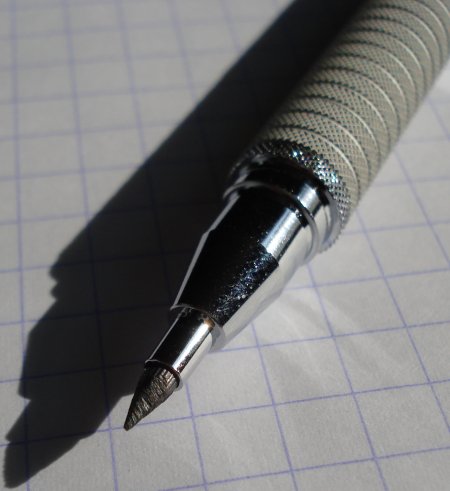
Made by Staedtler Japan, it has a number of interesting features, not least of which is a push button advance. The 2.0mm lead advances by clicking the cap. It functions just like a regular mechanical pencil, but with 2.0mm lead. Very nice.

Staedtler 925 25 20 2.0mm leadholder

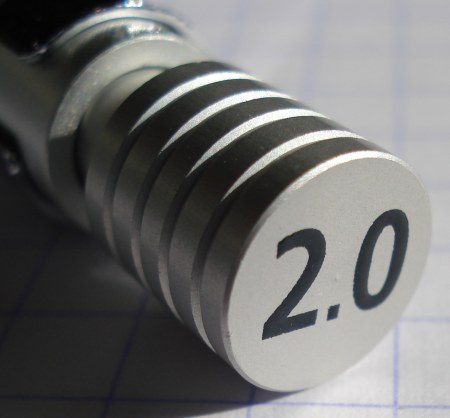
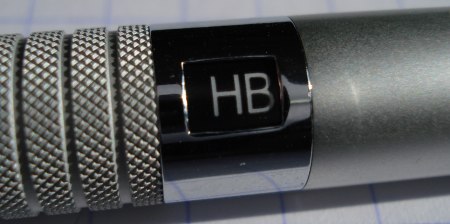
It has a cylindrical sleeve, a knurled grip similar to that of the Staedtler pencil holder, lead degree window, a clip, and the lead diameter printed on the cap – as if there could be any doubt!

Staedtler 925 25 20 2.0mm leadholder

The general intent seems to be to bring mechanical pencil features to the 2.0mm leadholder. It may not be to everyone’s taste, but in addressing the chosen task, I think Staedtler has succeeded!

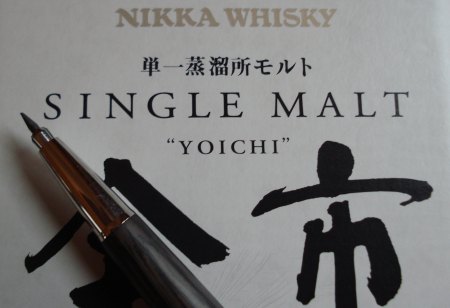
Mistubishi Pure Malt 2.0mm leadholder (and Nikka Single Malt 10yo “Yoichi” Whisky)

Mistubishi Pure Malt 2.0mm leadholder

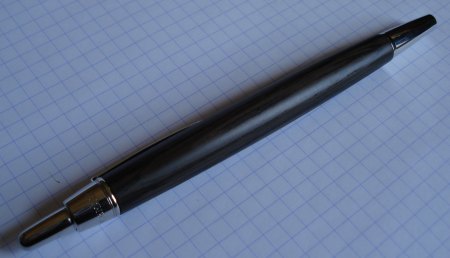
If you think luxury writing instruments and leadholders are mutually exclusive categories, look again.

Mistubishi Pure Malt 2.0mm leadholder

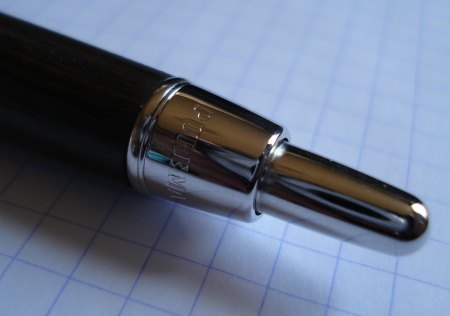
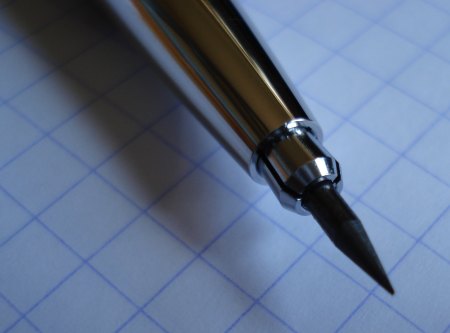
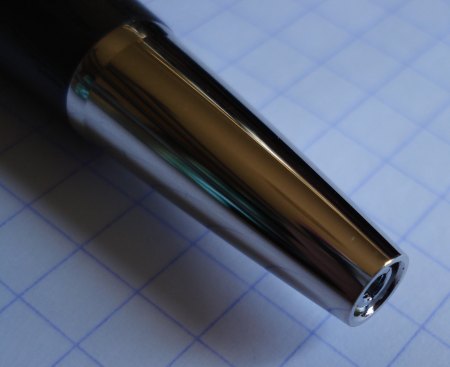
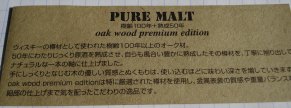
The Mitsubishi Pencil Company offers the Pure Malt leadholder, with the body made from oak reclaimed from Malt Whisky casks! (The clutch, tip, clip, and cap are metal.)

Mistubishi Pure Malt 2.0mm leadholder

It has a very sleek, clean appearance. The woodgrain is dark, smooth and elegant. Plus, it was made from a whisky cask!

Mistubishi Pure Malt 2.0mm leadholder

It has the great feature of a retracting clutch, making it quite portable and pocket-safe. (See photos.)

Mistubishi Pure Malt 2.0mm leadholder

I found the hold and feel quite comfortable, and like the manner in which it carries off being both a leadholder, and a fine looking writing implement.

Mistubishi Pure Malt 2.0mm leadholder

Mistubishi Pure Malt 2.0mm leadholder

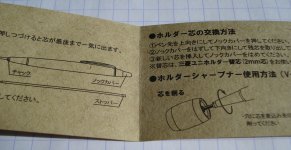
The small instruction booklet indicates there is a matching lead pointer, in a cask shape! I would love to get that item, but have not seen it for sale.

The unusual materials motivated me to seek out some actual Japanese whisky. Living in a place with a government liquor monopoly, my choice was the usual – no choice. Nikka Whisky Distilling Co.’s 10 year old single malt is the sole current offering. So Nikka it is.

(I have no knowledge of which distillery, Nikka or otherwise, provided Mitsubishi’s wood.)

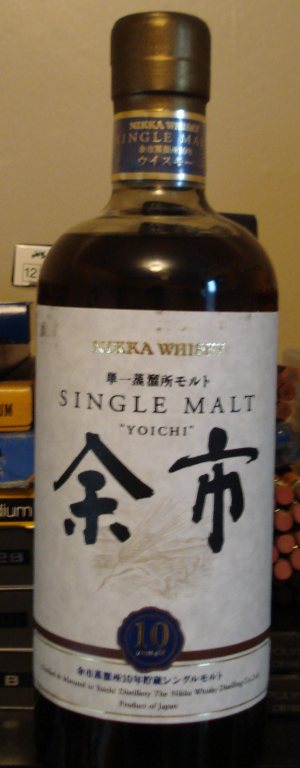
Nikka Single Malt 10yo Yoichi Whisky

The bottle is a pleasing shape, and the stopper seems to have a deep coating around the cork – something I’ve never before seen.

Anyhow, on to the whisky. It is a dark straw or tea colour. The nose is pleasant to me, but at a time of year when a “warm” day is -8 degrees, I won’t claim that I can discern much. The taste is full of nuts, toffee, and fruity notes. It’s a very nice dram – as smooth as a Tombow 6B pencil. The character is very much that of a nice scotch whisky, though made many miles away.

The bottle will certainly not survive as long as the leadholder.

Two great products, not necessarily for enjoyment at the same time!

Lamy Safari Fountain Pen/Ballpoint Pen set

Lamy Safari Fountain Pen/Ballpoint Pen set

There may be hundreds of reviews of the Lamy Safari out on the net. I agree with their general sentiment: the Lamy Safari is an excellent pen in and of itself, and one of the best overall values in fountain pens today.

I have a Pelikano Junior that’s also doing extremely well, but it’s new so I won’t place it in the Lamy’s category just yet. (Nor is the Pelikano even close to the same design level.) I also have other fountain pens that require a regime of rinsing, cleaning, and choosing the right ink. That’s okay, but convenience has some merits. The Safari, though abuse would be unwise, doesn’t require any of that sort of pampering. For me, it always just works. It is a great pen for someone who may be curious about fountain pens, but doesn’t want to spend too much.
Lamy Safari Fountain Pen/Ballpoint Pen set

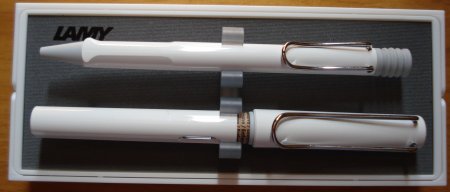
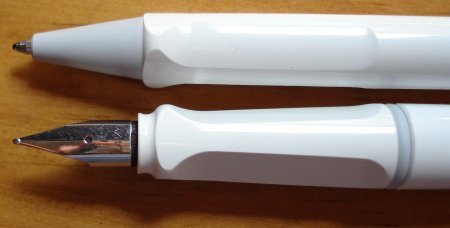
The Safari comes in many colours, and Lamy released a white version last year. The set in the picture also includes a matching ballpoint pen.

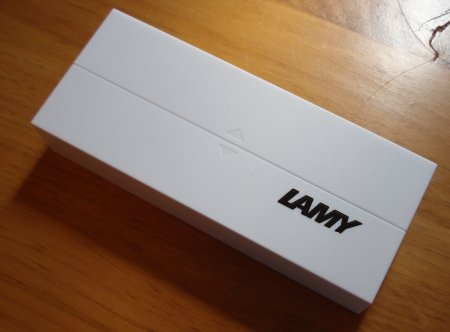
The aesthetics of the Lamy are current and modern. I think it’s a great looking pen. The plastic box housing the pens is itself a great piece of design.
Lamy Safari Fountain Pen/Ballpoint Pen set

Now let me mention a couple things that you might have to learn the hard way if you buy a pen like this somewhere other than in person at a specialty fountain pen shop (where they typically know their stuff).
Lamy Safari Fountain Pen/Ballpoint Pen set

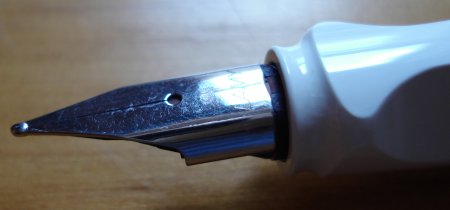
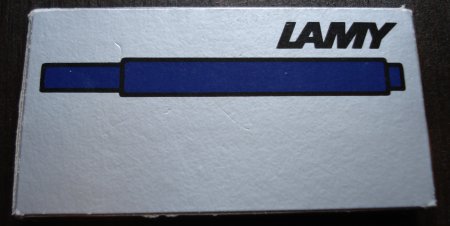
It will come with a handy ink cartridge. That’s nice, but be aware that this is a proprietary Lamy-only size. If you want to use these cartridges in non-Lamy pens, or use “standard” cartridges, such as from famous ink manufacturer Herbin, you are out of luck. Lamy makes a few colours, and that’s where your choice ends.
Lamy Safari Fountain Pen/Ballpoint Pen set

The ballpoint, which is also quite stylish and usable, takes a proprietary Lamy M16 refill. For someone like myself in a small city – the problem is that the local big box office supply store doesn’t carry this item.

Lamy Safari Fountain pen cartridge: T10

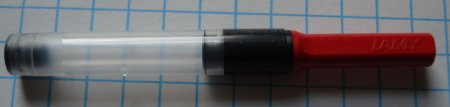
For the fountain pen – there is a path to more choices which I recommend – the (again proprietary format) Lamy Z24 format converter allows the use of bottled ink. This is to me a defining merit of the fountain pen – there are hundreds if not thousands of ink varieties available, ranging not just in shade, but density, wetness, drying times, and many other factors. The converter sets you free to try whatever ink you choose.
Lamy Safari Ballpoint refill: M16

To review, the Lamy Safari Fountain pen and ballpoint pen use these refills:

Ballpoint refill: M16
Fountain pen cartridge: T10
Fountain pen converter: Z24

Overall, I think they are great writing implements, but I have just a bit of concern about the non-standard formats – the ballpoint in particular.

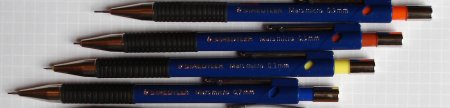
Staedtler Mars micro drafting pencils

Staedtler Mars micro drafting pencils

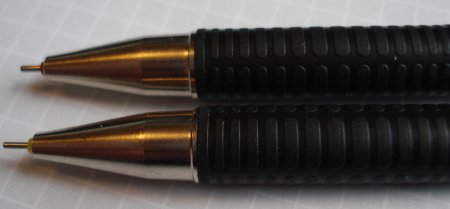
Along with the Pentel 120 A3 DX drafting pencils that I acquired last month at a university supply store, I purchased the rival Staedtler Mars micro line.

The micro, which may be Staedtler’s least expensive drafting pencil, has a metal tip, rubber grip, plastic body, metal clip, and metal cap. The lead advances by clicking the cap. A replaceable eraser is inside the cap. Just like the Pentel, a larger diameter pencil advances more lead per click than a smaller diameter pencil.

Staedtler Mars micro drafting pencils

I’ll admit that I immediately preferred the Pentel, and a month later, still do, for several reasons.

The Staedtler is a heavier pencil – about 13.2g to the Pentel’s 8.3g. The balance and hold on the Pentel seem (quite subjectively) superior to me, with the micro being unwieldy.

The grip on the micro is a patterned hard rubber. While I found the Pentel’s spongy grip pleasant, the Staedler was quite uncomfortable.

In appearance, I also much prefer the Pentel. It at least doesn’t seem to be taking itself so seriously.

For context, these are fairly inexpensive pencils, pretty much the cheapest that can make any claim at being a professional tool. Their price is equivalent to two to three quality woodcase pencils.

If you found yourself at a store with only these two drafting pencil choices, I’d recommend the Pentel.

Pencil Boxes (II) – Graf von Faber-Castell

Graf von Faber-Castell pencil box

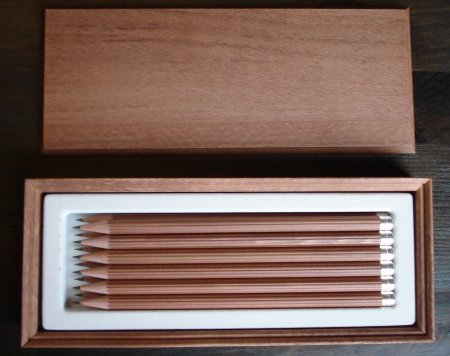
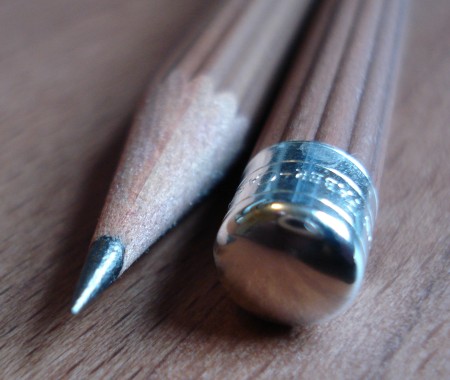
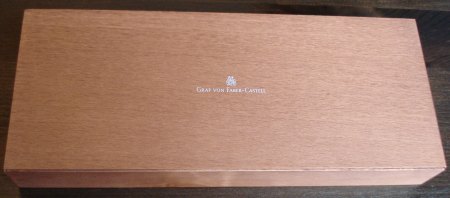
Faber-Castell seems to be the sole major manufacturer currently offering a wooden box of pencils. And what a box it is!

Graf von Faber-Castell pencil box

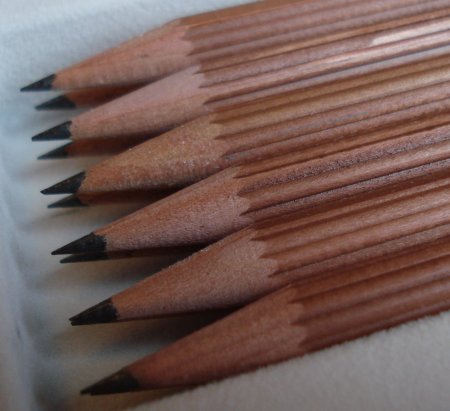
Their offering has a removable lid, and it houses a dozen fantastic pencils, the Graf von Faber-Castell pencil.

Graf von Faber-Castell pencil box

The outer packaging says “12 bleistifte” (12 pencils), which although truthful, is an incredible understatement.

Graf von Faber-Castell pencil box

My only grumble is with regard to the plastic insert that actually surrounds the pencils – it seems kind of cheap for the neighborhood, and will likely become dirty from contact with graphite over time. Otherwise, well done!

Graf von Faber-Castell pencil box

Faber-Castell 1117 pencil

Faber-Castell 1117

Natural finish pencils have deservedly earned a following. Today we’ll take a look at Faber-Castell’s offering in this market segment, the 1117.

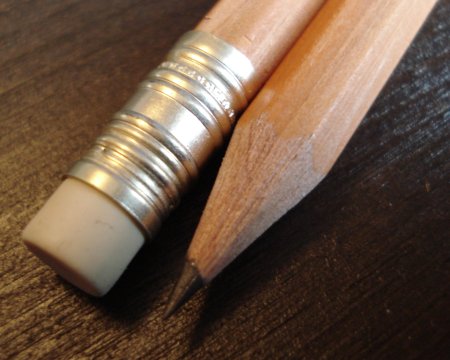
This pencil has a ferrule and eraser, untypical of Faber-Castell pencils, and possibly suggesting that it’s aimed at the North American market. But it seems to be sold mainly (solely?) in Europe.

The pencil isn’t all that “natural”, and doesn’t reveal that much of the woodgrain, in comparison with a Musgrave HB for example.

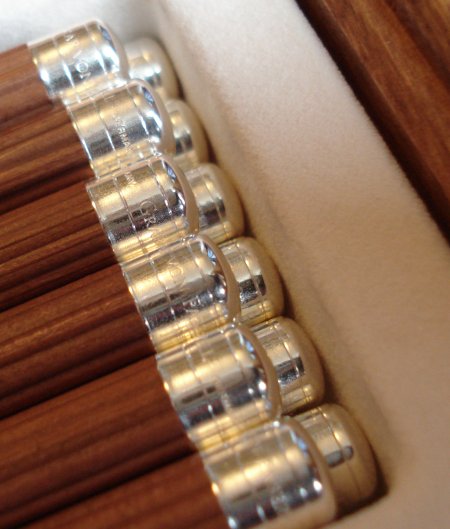
There is a silver-coloured ferrule and white eraser – the same ones used by the erasered version of the Castell 9000. The ferrule is quite nice, possibly one of the nicest on the market today.

Faber-Castell 1117

Markings are minimal, in white ink:

Side 1 (Obverse): GERMANY SV 1117 2=B [logo] FABER-CASTELL
Side 2: blank
Side 3: blank
Side 4 (Reverse): blank
Side 5: blank
Side 6: blank

The wood resembles that of the Castell 9000, and not the Grip 2001, so I suspect it is cedar.

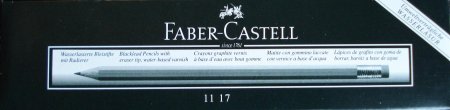
The box says “Eco-friendly water-based varnish.”

The pencils in my box ranged from 4.1g to 4.6g, with a 4.4g mean. This is the narrowest range that I’ve yet seen. The weight puts them below the Musgrave HB, and just above modern eraser-less pencils.

The grip is matte and just slightly rough. I’m a little surprised that Faber-Castell would sell a pencil in this format, as it contradicts their general design approach, which tends towards the finished and refined end of the spectrum.

Faber-Castell 1117

So what does “2=B” mean? They seem to use this scheme with the Grip 2001, but not the Castell 9000. For a given vendor, an HB and a B pencil will only be different by a minor gradation. Anyhow, this lead may be a ‘B’, and is dark and rich, certainly better than most pencils.

It’s a good pencil, and I can imagine the 1117 becoming popular.