A custom Pentel Kerry pencil and a surprise from Clairefontaine

2.0mm Pentel Kerry

Sometimes familiar stationery items aren’t what they seem. Here is a Pentel Kerry mechanical pencil – but unlike any most of us have ever seen. It is paired with a Clairefontaine pocket notebook.

2.0mm Pentel Kerry

This pencil – a classic – is a custom modification by isu of the uncomfortable chair, turning the pencil into a 2.0mm version! It continues to fully function as a mechanical pencil. Look at the quality of the finish – it appears as if it came from the factory.

Thank you isu for such a wonderful gift!

2.0mm Pentel Kerry

As to the the second surprise – let me mention some context. Many of us were very surprised to learn that Tombow has moved (at least some) production of their iconic Mono 100, one of the world’s best pencils, to Vietnam. There is a great account at Lexikaliker. The news so far isn’t good – unfortunately, the Vietnamese version appears diminished in finish quality, even if retaining the same lead core.

So what a surprise to find a notebook the same week from Clairefontaine, which like sibling brands Rhodia and Exacompta, strongly associates itself with “Made in France”, that is made in Morocco. Yes, “design” and “paper” from France. Fortunately, I find the notebook to be excellent, with creamy 90 g/m2 paper (presumably the same as the “Rhodia R” series) and a pocket format. I’ll note a particular pencil advantage – this thick paper takes well to traditional rubber erasers, such as the round Graf von Faber-Castell.

The Secret Stationers of Toronto

A goal I’ve set in reviving pencil talk is to talk more about all things local – products, retailers, and more. And for me, local now means Toronto, Ontario, Canada.

One of the things I’ve been trying to do is reacquaint myself with local stationers – and I’ve noticed something I find really odd. Stationery stores are hiding themselves. Not all of them, but these two stores are situated such that walk by traffic must be near zero. They are in out of the way destinations, and hard to locate. You basically have to learn about them, then plan a trip.

Perhaps some readers with retail knowledge can comment. Your insights would be appreciated.

First, Wonder Pens. You may have heard of them – they have a major social media presence. This store is on a side laneway of a warehouse building on a former industrial street that has largely been converted to offices and housing. There isn’t much retail around that I observed.

Though they do have signage, I couldn’t even find the front door at first – I entered an unlocked utility entrance that led to a series of locked doors. (The door on the left in the photo. The “main” door did not initially look like the store entrance to me.)

Photo of Toronto's Wonder Pens

Wonder Pens is great, and worth a trip if you’re visiting Toronto. They’re conceptually the opposite of more traditional stores that store product in locked glass cases. You can try many fountain pens freely, and just being able to do this is already a difference that makes the products much more accessible.

They have a formidable paper selection, with many products from European and Asian companies that I’ve previously only seen online. I’ll be featuring at least one item in a future post. Unfortunately, there wasn’t anything of much interest on the pencil front.


So, if Wonder Pens is off the beaten path, I Have a Crush On You is in witness protection. It is located in a former warehouse and factory district that has largely been converted to tech offices. The store is on a side street of this area, one with no retail. Further, they are accessed via a wooden stairwell in a parking lot area.

The store is unexpectedly good. I believe I’ve been to the major stationery stores in Vancouver, Toronto, Montreal (and Northern California), and I am pressed to name another retailer with so much original and creative material that comes from local sources, or from the store itself. There is a very high proportion of items in this store that you’ll find only there.

Photo of Toronto's I Have A Crush On You

And, it isn’t just a store. It is a gallery, and a working studio and production centre with live letterpress equipment in use.

They have a lot of cards and paper items, notebooks, “hotel keys” with Toronto neighborhood names inscribed. Not so many writing implements.

Even the non-local items struck me as really interesting. They had a necktie made of something called sonic fabric.

I had just seen Evan Holm’s WaterTable at the San Jose Museum of Art, and I found it striking how cassette tape is being artistically explored in 2017, and not just as decoration, but the core sound reproduction properties. The store is definitely in tune with trends.

I like both stores and want them to stay around! I hope they know what they’re doing with their chosen locations!

Northern Pencils

This post is a research query. Is anyone familiar with a Canadian company Northern Pencils?

Street view of Northern Pencils

An online search found a website for a small company called Northern Pencils.

It looks really interesting. A supplier of slats and unfinished pencils, I presume there was never a “Northern Pencils” branded pencil. The wood species used sound very interesting: “We use quality Red Cedar, Lindenwood and some Northern White Pine for special run orders.” Red Cedar? I know many pencil users who would love to see a modern Red Cedar pencil. (Maybe we have? Some Staedtler press materials have mentioned the use of Canadian cedar.)

If you know something, please feel free to share!

Pencil Machinery from Northern Pencils

Unfortunately, one can quickly see that the website is unmaintained, and I further found this auction site. It looks like the company may have only been around for one year.

The only good aspect I can imagine is that someone will get the idea to start up a small pencil manufacturer – the equipment costs don’t look insurmountable, and we know that “buy local” is a major trend!

No Hidden Pencils in Hidden Figures

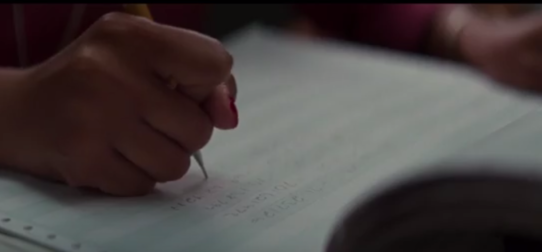
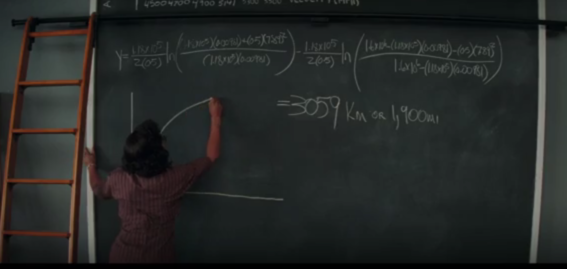
Just a brief post about something I haven’t seen in the press – pencils play a major role in the film Hidden Figures.

Still from Hidden Figures

In particular, mathematician Katherine Johnson (Taraji P. Henson) uses a Pentel P20X mechanical pencil in contrast to the other engineers, who use yellow woodcase pencils. A more evolved pencil for a more evolved person? As some of the management become just a little more enlightened, you observe that they also start to use mechanical pencils.

When Mary Jackson (Janelle Monáe) decides to become an engineer and wonders about her husband’s support, he gives her a clutch leadholder as a gift.

Still from Hidden Figures

And chalkboards! So high they require library step ladders to reach the top. Giant chalkboards for giant problems.

A woman with the right pencil can’t be stopped!

The Viarco Vintage Collection

From Viarco of Portugal, pencil talk is pleased to present an amazing new limited edition pencil collection. Further, we are privileged to feature an interview with Viarco’s José Vieira.
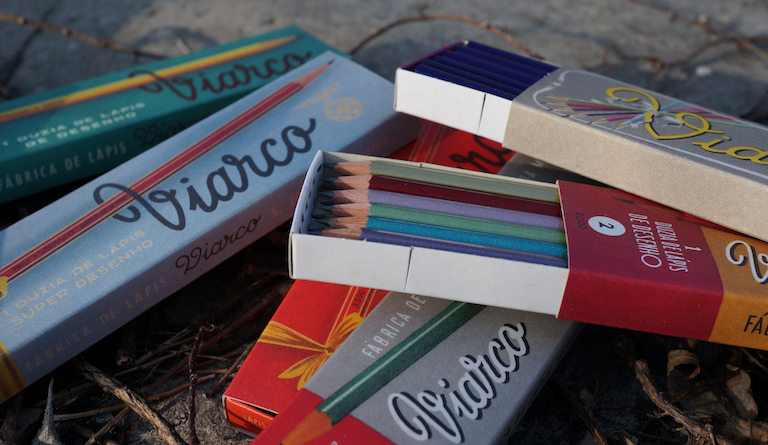
Viarco Vintage Collection

The set was a surprise to me – six historical recreations of pencils and packaging, offered as a set. I’m not sure where the set is being offered – I found it at a US retailer, but not on Viarco’s website.

The six pencil boxes are housed in a black cardboard presentation box, so the set has 72 (a half gross) pencils in total, similar to many vintage boxes we’ve seen over the years.
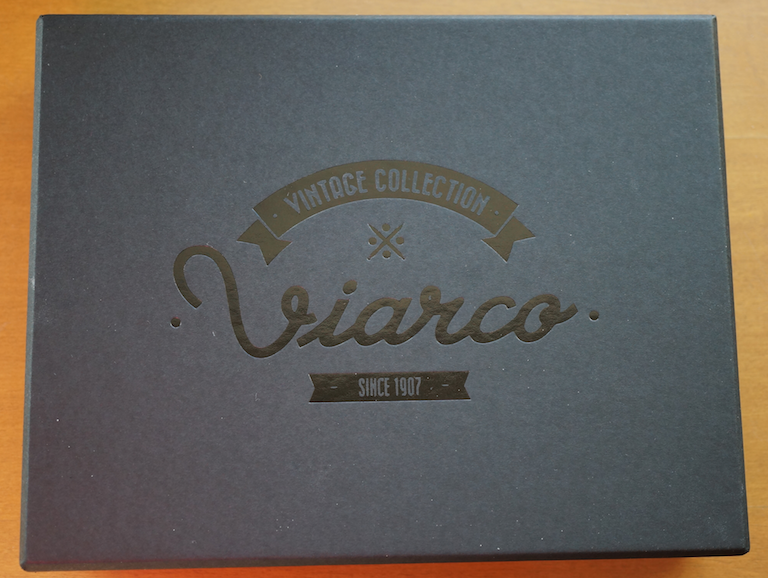
Viarco Vintage Collection

The box has a cellophane wrapper with a sticker that notes:

This limited edition collection is wholly designed in Portugal using long-established production methods.

There is a bar code and these notations: REF. HRSETCX12 5601470505979

The box itself is matte black with a simple glossy graphic – “Vintage Collection Viarco Since 1907”.
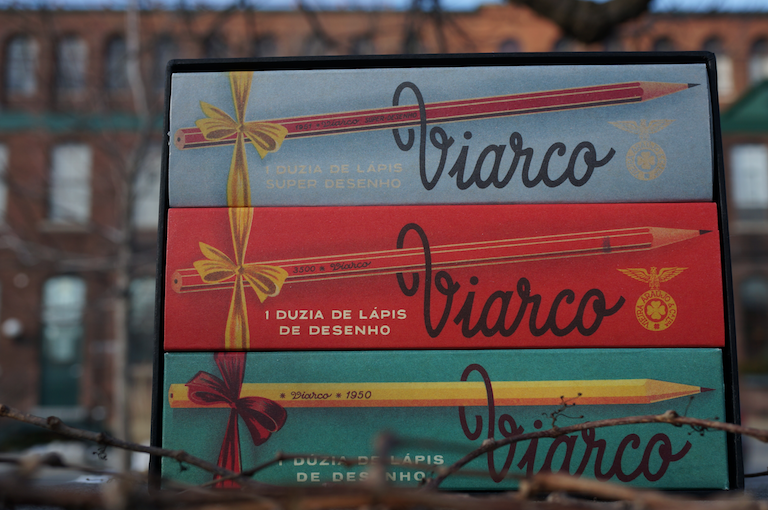
Viarco Vintage Collection

Opening the outer box is a treat, as we see the individual pencil boxes:

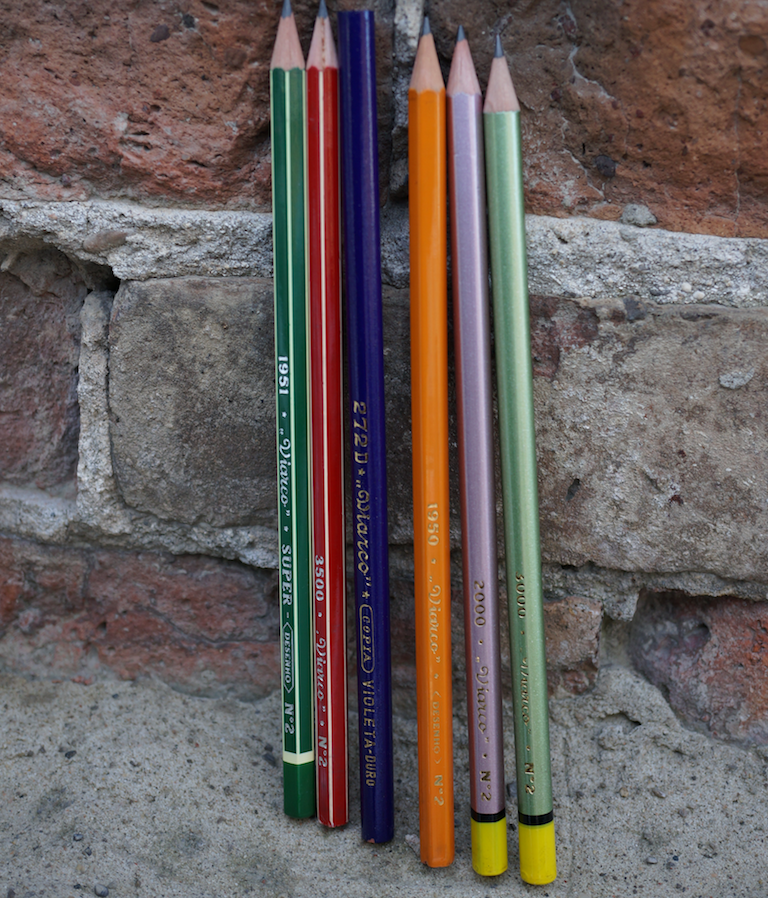
1. The 1951 Super Desenho – these are beautiful hexagonal pencils in green, purple, red, black, purple, and marigold, with white pinstripes. The marigold is the only one to feature a contrasting cap – yellow. The box is sliding, and blue.

2. The 3500, red hexagonal with white pinstripes. These have unfinished caps. They have a red sliding box.

3. The 1950 Desenho is yellow, uncapped, and hexagonal. The box is green with a folding closure.

Now we get to the second row!

4. The 272D Copia Violeta Duro is a round purple copying pencil that we looked at in 2008 as part of a larger article on copying pencils:

The hidden life of copying pencils

These are the only unsharpened pencils. They come in a colorful green/grey sliding box.

5. The 3000 – a round light metallic finished pencil in violet, turqoise, pink, red, yellow, and green. They have a yellow finished cap. The box is grey slider.

6. The 5000 – basically, an hexagonal version of the 3000. An orange sliding box houses the pencils.

Viarco Vintage Collection

The box also has an insert (Portuguese/English) discussing the set.

I love that there is a variety of pencil types, of packaging, of graphics, and with beautiful typefaces and historical themes.
Viarco Vintage Collection

This post has a special treat. A decade ago, online commerce was not as advanced, and this blog may have been Viarco’s first online customer. It was done in a way that would be hard to imagine now – back and forth correspondence, a bank draft, frequent communication. I was very impressed at what this company were willing to do for a single overseas customer.

The best aspect of this is that I’ve been able to keep in touch with Viarco over the years – and in particular with José Vieira, whose title is General Manager of Viarco – Fábrica Portuguesa de Lápis, though he likes to think of himself as just a pencil worker.

Viarco was founded in 1907, but found itself in financial trouble in 2011. José started working there in 1999, and is the fourth generation of his family to work at Viarco. In 2011 he and his wife Ana bought Viarco to ensure the company’s continuance. Here are a few questions for José.

pencil talk: What was the inspiration for the Viarco Vintage Collection?

José: The existence of original pencils and packaging, and the opportunity to make them again.

We have a friend that is a designer, and he chose Viarco to make a study of the design inside a PhD that he is doing in the university.

As you know we started to use some vintage packaging ten years ago, at first to sell them in Portugal where there exists a generation which has affection for them; now we would like to know if they could exist just by themselves in other countries and cultures outside of Portugal.

I think you know that Viarco produces several innovative materials and that we are very, very, very interested in what it can be in the future, but our roots are in the pencil factory. The project is to keep this ancient industrial installation working.

So it’s not a retro trend, it’s not a commercial goal, not even an academic project but once again the result of several people with different interests and needs working together to keep the knowledge and the memories available for those who like to dream of a different kind of society.

pencil talk: How were the six varieties in the set chosen? Are there other pencils you regret that you were unable to feature?

José: We chose those six because they represent a coherent language of a time period when Portugal was closed to the outside world due to the dictatorship and for that reason something that could be an authentic example of Portuguese design. And of course because they work well as a set.

There are several packaging types that would like to make again … Some of them we tried, but unfortunately there is a no one able to make the boxes, or we have already lost the tools to produce the pencil.

There are some limitations about what we can do and what our suppliers are able to produce. In the past when everything was done manually, and the cost of this kind of labour wasn’t a problem, they could make things that now seem impossible to reproduce, companies don’t know how to do it, don’t have a commercial interest in it, or even because it’s too expensive and for that reason unaffordable for this kind of material.

pencil talk: The Vintage Collection is not the first nostalgic or historically packaged item from Viarco. Is it correct that the modern Viarco has a special relationship with the company’s heritage?

José: … Answer nº1, plus as I told you before we are much more interested in the future than in the past, however here in the factory everything is from the past except the mindset of the people that work here and the people that we receive.

So its quite natural that the heritage influences everything that we do, and we try to respect it every time that we develop new products and packaging because this is a important part of our identity and authenticity.

pencil talk: What pencil is on your desk right now?

José: Dozens of damaged pencils that I take from production to try :-)

During the different processes of the pencil production all the damaged pencils start to being separated. Normally I take one or two of those to sharpen and try to see what happened.

So in my desk normally I have damaged pencils that, from time to time, I need to send the endless drawer because some are so nice that I want to keep them for future memory.

—-

My sincere thanks to José Vieira for his great generosity in taking the time to answer these questions. It was tremendously enjoyable to learn about his passion for Viarco.

The outdoor photos were taken in front of the Toronto Carpet Factory and the former Central Prison Paint Shop, 19th century buildings in Toronto.

Other Viarco posts at pencil talk: Link