Mark Sheet pencils from Japan

Mark Sheet pencils from Japan

These pencils aren’t aimed at writing, yet they are all superb at the task.

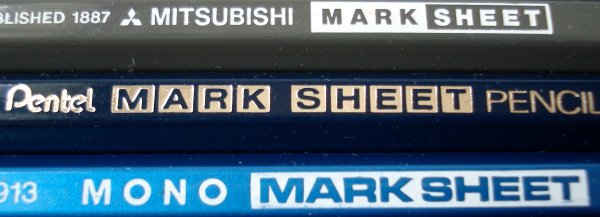
Sold to students facing multiple choice exams, they are specialty test pencils. These specific ones are made in Japan, and called “Mark Sheet” pencils.

Of course, test taking isn’t the only possible use, and today we’ll take a look at them from a writing perspective.
Mark Sheet pencils from Japan

The pencils are:

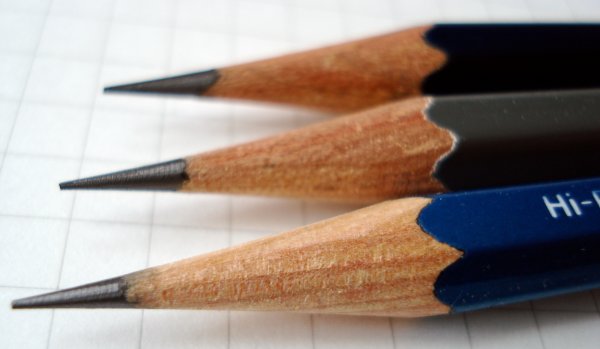
Mitsubishi Uni 100 Mark Sheet pencil, HB
Pentel CBM10 Mark Sheet pencil, HB and B
Tombow LM-KMS Mono Mark Sheet pencil, HB

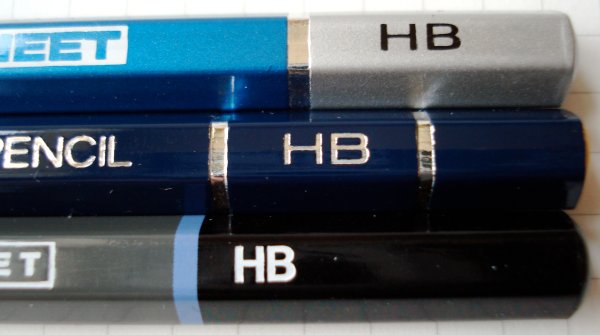
All are hexagonal with finished caps, and sold unsharpened.
Mark Sheet pencils from Japan

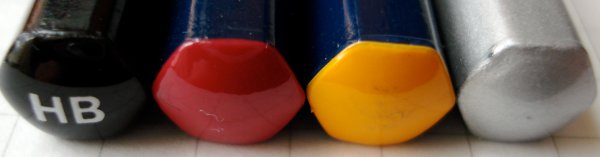
The Mitsubishi is grey, with a black dipped end and blue ring. The lettering is white, and the pencil states, “Hi-Density Lead for Mark Sheet.” The cap is stamped “HB”.

The Pentel is navy blue, and has the slogan, “the best quality for OCR sheet marking.” The blue is offset by two silver rings and silver lettering. The HB has a marigold cap, while the B grade sports red.

The Pentel has a vivid bright blue finish, with a matte silver dipped end and silver ring. The lettering is in white.
Mark Sheet pencils from Japan

All three pencils have nice finishes, and sharpen easily.

Certain pencil/paper combinations really shine (a subject for a future post), and on a Maruman Mnemosyne notebook, all three pencil brands are exceptional in their non-crumbling adherence, smooth application, and dark rich black lines. The best? For me, the Pentel, and especially the B grade version, stood out as a super-smooth writer.
Mark Sheet pencils from Japan

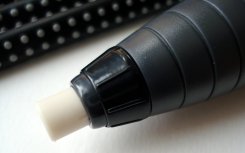
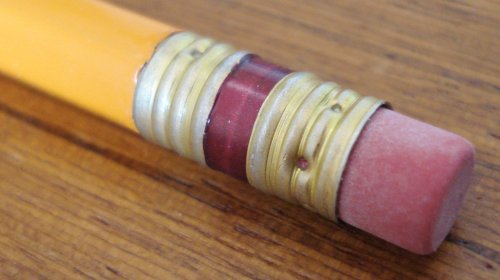
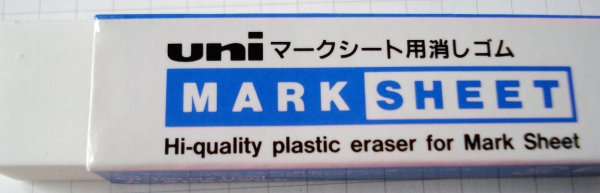
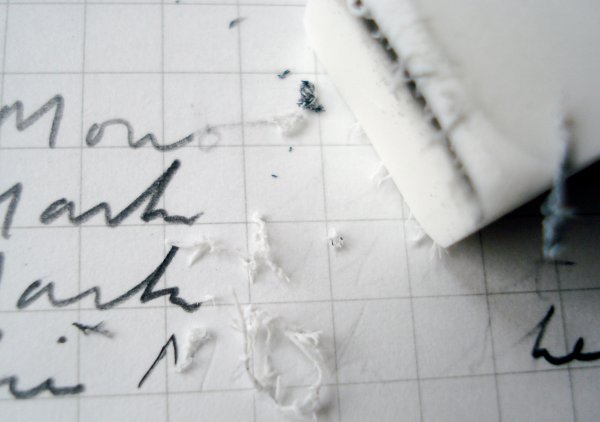
Specialty pencils of course have specialty erasers, and the Uni Mark Sheet eraser does a great job. The formula seems somewhat different than other familiar erasers from Pilot or Tombow – more crumbly, but possibly even more effective.
Mark Sheet pencils from Japan

(Pentel also make a “mark sheet eraser”, but I haven’t seen it in person.)

All are first rate, but writing with the Pentel CBM10 Mark Sheet pencil in B is an experience I especially recommend to all pencil users!

See also:

Pentel Mark Sheet Pencil – pencil talk, August 2008
LM-KMS – Lexikaliker, June 2009
MONO Mark Sheet Pencil Set – On the desk, at any time, March 2010
Uni Style Fit multipencil

It’s been a few days since the last post. Despite this quiet period, the blog just had the busiest day on record. I’d like to say thank you to Selectism, whose link sent many (no doubt well dressed!) visitors this way.

~~~~~~~~~~~~~~~~~~~~~~

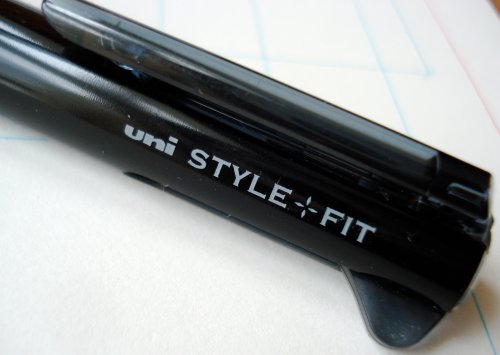
Uni Style Fit

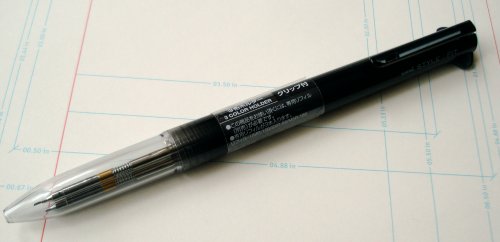
Today we’re going to look at the Uni Style Fit. The Style Fit is an inexpensive multi-implement writing system known for a vast array of refill types and colours. Here is an official Mitsubishi Pencil Co. press photo showing the lineup. I count 16 body and 103 refill choices! 102 of those refill choices are pens – a wide range of gel diameters and colours, and a smaller ballpoint selection. There is also a single pencil refill – 0.5mm Nano Dia HB lead.

Uni Style Fit

Though there are many multi-pens on the market, they typically have a set configuration – two ballpoints and a pencil, for example, or three ballpoints – which can’t be changed.

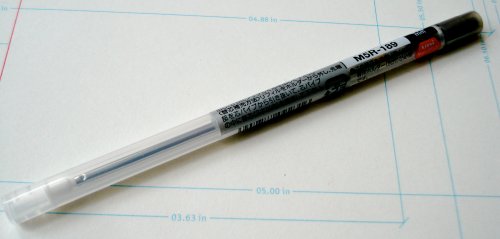
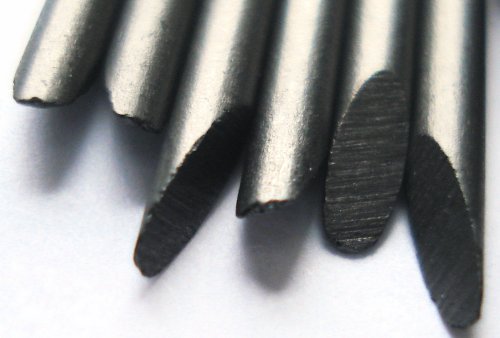
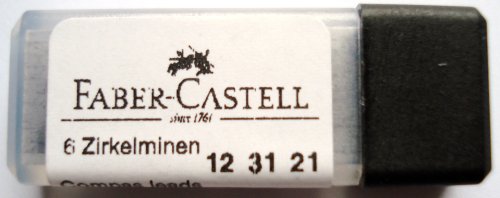
What is really interesting about the Style Fit is that you can put in any combination of the 103 refill types. This made me think that it could be configured as an inexpensive multipencil. I ordered a 3-refill body (all of $US3.00 at Jstationery) and three pencil cartridges.

Uni Style Fit

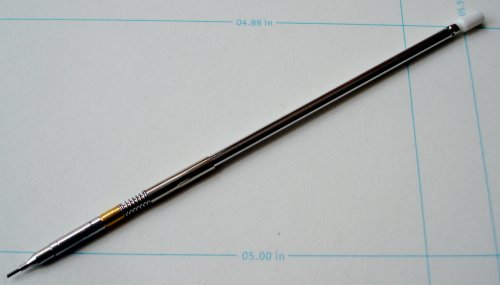
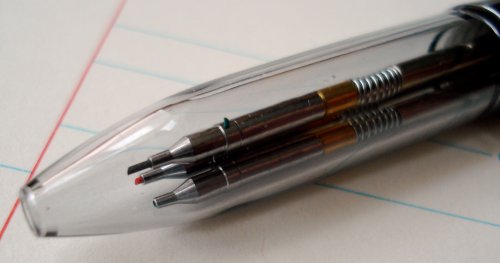
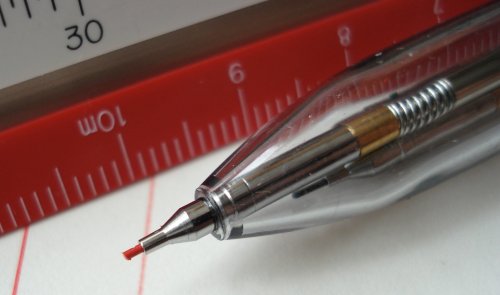
I changed one cartridge to red lead and another to green. There seemed to be very little tolerance in the cartridges, so replacing the leads required a steady hand. (see below)

Uni Style Fit

The mechanism seems complicated, yet is reasonably practical. The clip is also a lead selector, and two other spokes also function in this capacity. I attached the graphite cartridge to the clip, and the red and green leads to the smaller spokes. You select a lead by sliding the appropriate clip or spoke. This in turn extends the cartridge. The cartridge will lock in place, and the lead is extended by making smaller clicks of the clip or spoke.

Uni Style Fit

Overall, I’m pleased. While admittedly a bit of a novelty, it is also an inexpensive and functioning red-green-graphite multipencil. There is some rattling noise inside the pencil, and it doesn’t exactly look like a luxury writing instrument. Yet at this price point, neither consideration seems important. Also available in single and 5-refill bodies, there are a lot of possible uses for such a customizable item.

Uni Style Fit

Update (March 14, 2010): I had mentioned the challenge of replacing the default lead inside the cartridge. This was based on attempting to reload a stand-alone cartridge. If you first place the cartridge in the pencil body, replacing the lead becomes simple.

Faber-Castell Grip 2001 pencil in black

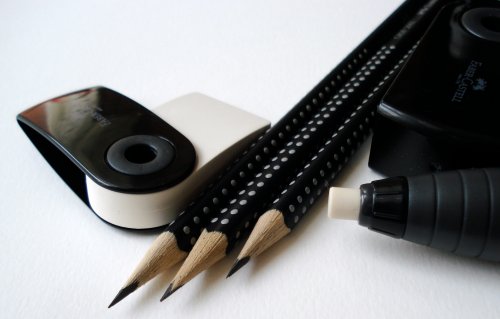
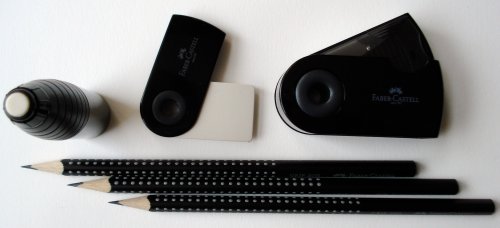
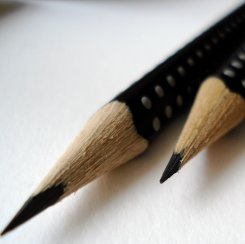
Black Faber-Castell Grip 2001 pencil

A couple of years ago, I found some Grip 2001 pencils in red and blue finishes. There were two comments about a black version also existing. I guess the black version is even more unusual, as I’d not even seen it online, let alone in person. That recently changed, as I saw a package of these pencils with some accessories offered by an eBay seller.

Black Faber-Castell Grip 2001 pencil

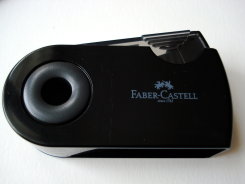
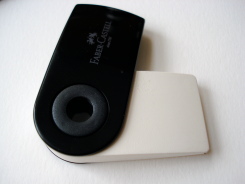
The accessories are themselves interesting – a container sharpener, a sleeved eraser, and an eraser/sharpener combination. They look like they would make a great inexpensive gift for a young person.

Black Faber-Castell Grip 2001 pencil Black Faber-Castell Grip 2001 pencil

Beautiful and simple stationery items. Alas, just one problem – none of the the sharpener blades can be replaced, the sleeve eraser can’t be refilled, and the eraser core in the combination sharpener/eraser has no refill for sale that I’m aware of. These accessories seem too nice to be disposable.

Papermate Mirado Classic pencil (2010)

The Papermate Mirado Classic pencil.

The closure of Sanford’s US pencil factory last year was perhaps the final chapter in the story of US pencil manufacturing’s demise.

Starting with the move of incense cedar pencil slat maker CalCedar’s manufacturing to China, and followed by Dixon’s departure to Mexico and China, Sanford’s exit was perhaps expected. Of course, the names and brands carry on.

The Papermate Mirado Classic pencil.

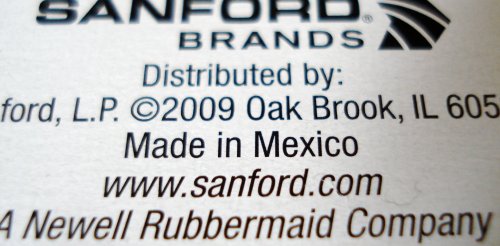
Papermate’s current website gives no indication of woodcase pencils being part of the product line. A weekend visit to a large office supply store revealed a hint of the future. The most expensive pencils in the large store, the box of 12 No. 2 Mirado pencils appears as they have for years, except for the statement “Made in Mexico”.

Appearance

The packaging still claims “The World’s Smoothest Writing Pencil – Guaranteed!” The cardbord box of twelve seems basically unaltered.

The back of the box states:

  • 100% Premium Cedar Pencils
  • Shapens to a Fine, Exact Point
  • Soft, Non-Smudge Eraser
  • Made in Mexico
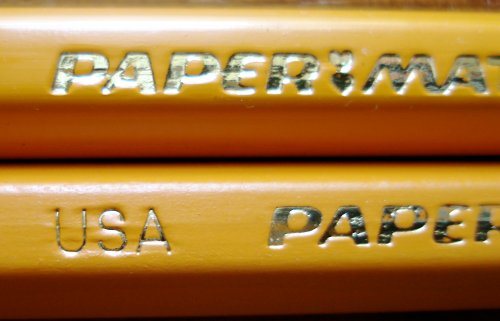
  • The pencils themselves are yellow, just like their predecessors, except missing the “USA” lettering.

    The Papermate Mirado Classic pencil.

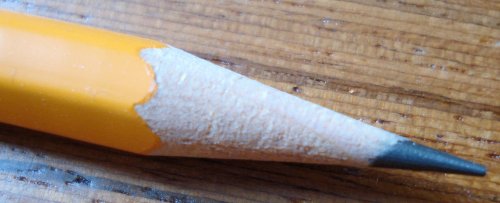
    The manufacturing details appear slightly improved – they’ve reverted to an unsharpened format. Some paint spills over the end, but the problem of imprecise clamping of the ferrule appears much better. The varnish seems okay, not the best, yet certainly better than the “no name” pencils that supermarkets sell.

    The Papermate Mirado Classic pencil.

    The Papermate Mirado Classic pencil.

    Sharpening

    I had no trouble sharpening the pencil in a manual sharpener, a desktop Carl, or a battery-operated Panasonic sharpener.

    Writing

    A real surprise. I’ve never been a huge fan of this pencil, possibly because of the bland, generic appearance. But it writes quite well. Perhaps not as smoothly as pencils costing five times more, but still quite nicely. It certainly seems as good as the US made predecessor, and I’m wondering if it may even be better?

    The Papermate Mirado Classic pencil.

    Erasure

    The erasers seem exactly like those of the predecessor, pink with powdery (latex?) coating. At least while new, they work reasonably well, especially compared with other “pink” erasers.

    The Papermate Mirado Classic pencil.

    Overall

    I am leaning towards a conclusion opposite to the one I thought I was going to make. Whether it is new equipment or some other factor, the new Mirados seem to be manufactured to a standard at least as high as their immediate predecessors.

    Have you tried them yet?